

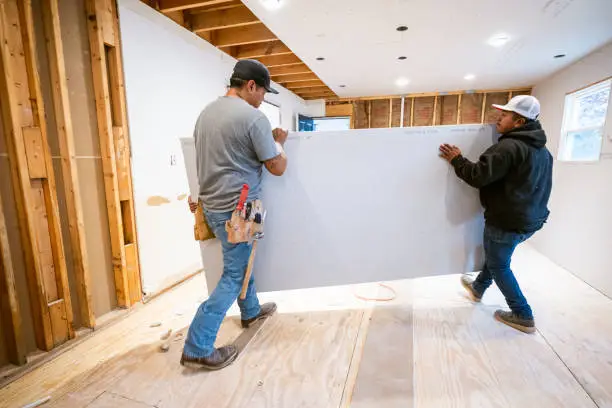
How to Prevent Cracks in Drywall
Drywall cracks are one of the most common—and frustrating—issues homeowners and property managers face. While small cracks may seem cosmetic, they often signal underlying movement, poor installation, or environmental stress. The good news? Most drywall cracking is preventable with the right planning, materials, and technique.
At S-Line Contractors, we focus on drywall systems that stay smooth and stable over time. Here’s how to prevent drywall cracks and protect your walls for the long run.
Why Drywall Cracks Happen
Cracks usually form due to:
- Structural movement or settling
- Temperature and humidity changes
- Improper framing or fastening
- Poor joint treatment
Understanding the cause is the first step to prevention.
Start With Proper Framing
Drywall is only as strong as what’s behind it. Crack prevention begins with:
- Straight, properly spaced studs
- Secure framing connections
- Adequate blocking at joints
Solid framing reduces flexing that leads to cracks.
Use the Right Drywall Materials
Choosing quality materials matters. Best practices include:
- Proper drywall thickness for the application
- Moisture-resistant board in bathrooms and kitchens
- Approved corner bead and joint compounds
Cheap materials often fail faster.
Install Drywall Correctly
Professional installation makes a major difference. Key steps include:
- Correct screw spacing
- Avoiding overdriven fasteners
- Staggering seams
Proper fastening minimizes stress on joints.
Reinforce Drywall Joints
Most cracks appear at seams. Reinforcement helps by:
- Using paper or fiberglass joint tape
- Applying multiple thin coats of compound
- Allowing proper drying time between coats
Rushing this step is a common cause of failure.
Control Moisture and Humidity
Excess moisture causes drywall to expand and contract. Prevent issues by:
- Ensuring proper ventilation
- Using exhaust fans in wet areas
- Maintaining consistent indoor humidity
Stable conditions help drywall stay intact.
Allow for Building Movement
Buildings naturally move over time. Smart construction accounts for this by:
- Using control joints where needed
- Avoiding rigid connections in large wall spans
- Allowing expansion where required
Designing for movement reduces cracking risk.
Avoid Structural Shortcuts
Cracks often appear when corners or ceilings are tied incorrectly. Professional detailing ensures:
- Floating corners where appropriate
- Proper ceiling-to-wall transitions
- Reduced stress at connection points
Details matter more than most people realize.
Repair Small Issues Early
Hairline cracks should be addressed promptly. Early repairs prevent:
- Crack expansion
- Repeated patching
- Larger finish failures
Quick action saves time and money.
Why Professional Drywall Work Matters
Drywall may look simple, but it’s highly technical. Professional drywall installation ensures:
- Proper materials
- Correct techniques
- Long-lasting finishes
Experience prevents repeat issues.
How S-Line Contractors Prevents Drywall Cracks
At S-Line Contractors, we focus on:
- Solid framing coordination
- Quality materials
- Precise installation and finishing
Our approach minimizes movement stress and delivers smooth, durable walls.
Final Thoughts
Preventing cracks in drywall starts long before paint goes on. With proper framing, quality materials, and professional installation, drywall can remain smooth and crack-free for years.
At S-Line Contractors, we treat drywall as a finished system—not just a surface—so our projects look good and hold up over time.
Frequently Asked Questions (FAQ)
Are drywall cracks normal in new homes?
Minor settling cracks can occur, but proper installation greatly reduces them.
Can humidity cause drywall cracks?
Yes. Moisture changes cause expansion and contraction.
Do drywall cracks mean structural damage?
Not always, but recurring cracks should be evaluated.
Is patching enough to fix cracks permanently?
Only if the underlying cause is addressed.
Does S-Line Contractors handle drywall installation and repairs?
Yes. We install and repair drywall using methods designed to prevent future cracking.
Let’s Build Something Together
Ready to elevate your commercial space? Contact S-Line Contractors today to discuss your project and discover how we can bring your vision to life.